The Kingdom of Corvane
A kingdom where nothing is forbidden — and everything is owned.
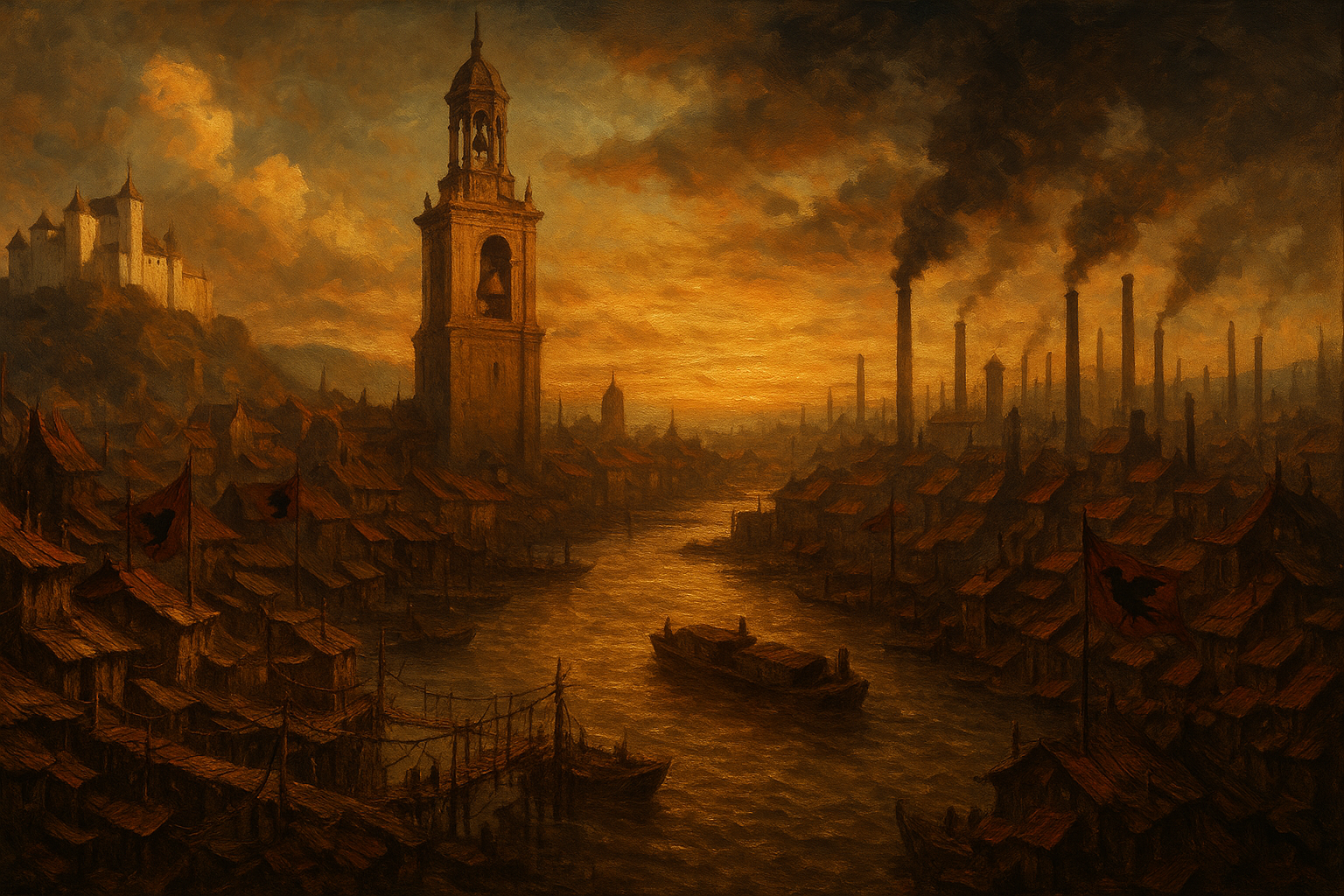
The Royal City of Bellwether, on the river Merrow — half a million souls, five Companies, one gentle king. The people call it the City of Chains.
A kingdom at peace. Look closer.
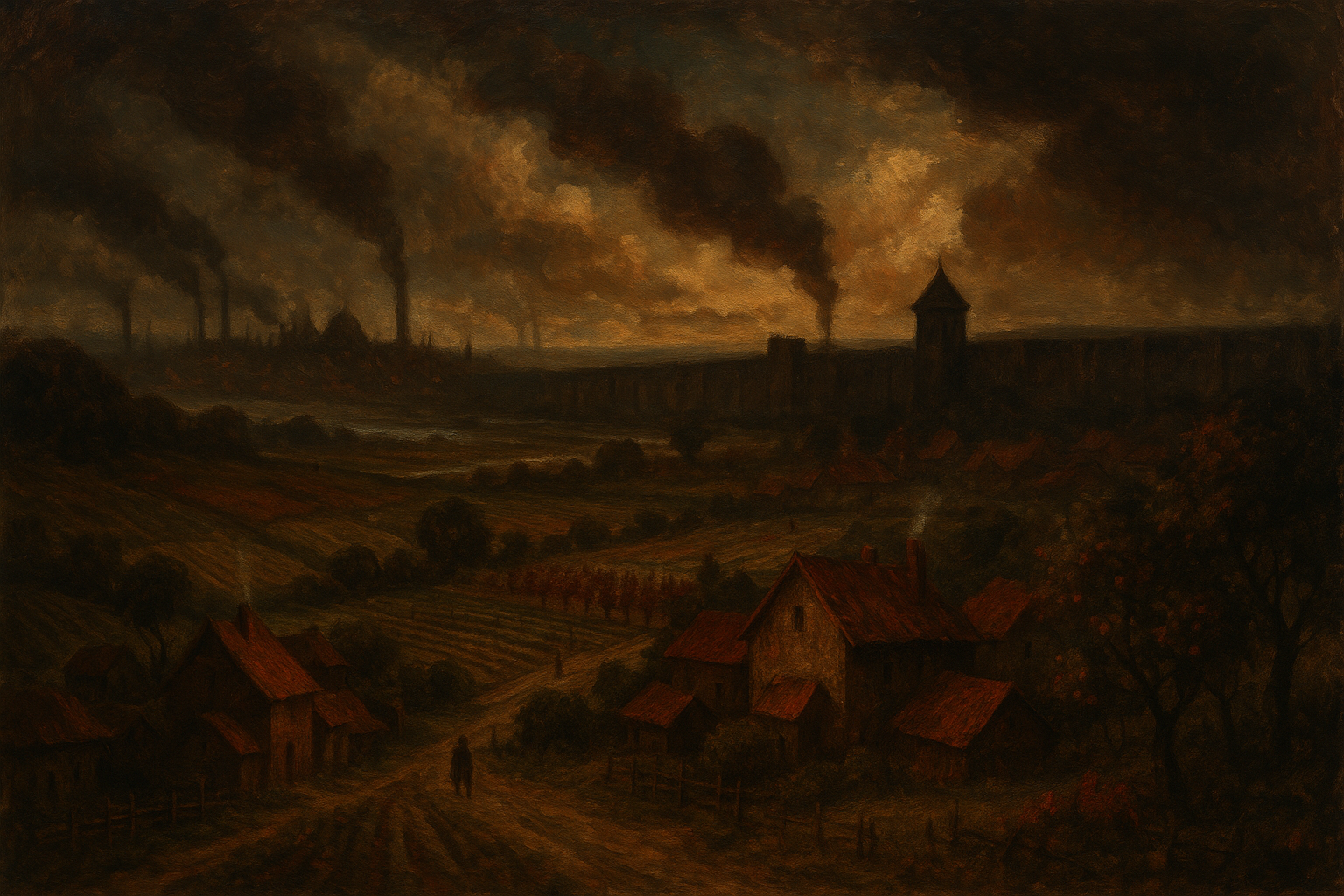
The Kingdom of Corvane is old, green, and tired. Its crest is a crowned crow; its anthem is a lullaby; its king has not finished a sentence in eleven years. From the chalk cliffs of the southern coast to the flooded barley country of the north, Corvane looks — from a respectful distance — like a kingdom at peace. There has been no war in a generation. There are no rebels in the hills. The roads are safe, the tolls are collected, and the bells of the capital ring on the hour, every hour, as they have for four hundred years.
Look closer and you will notice that every road has a toll, every bell has a bill of maintenance, and every safe mile of highway is patrolled by guards whose wages are paid not by the Crown but by the Companies. Corvane is not governed so much as it is administered. The kingdom's true constitution is a filing cabinet in the Charterhouse, and its true nobility are five signatures at the bottom of a very long page.
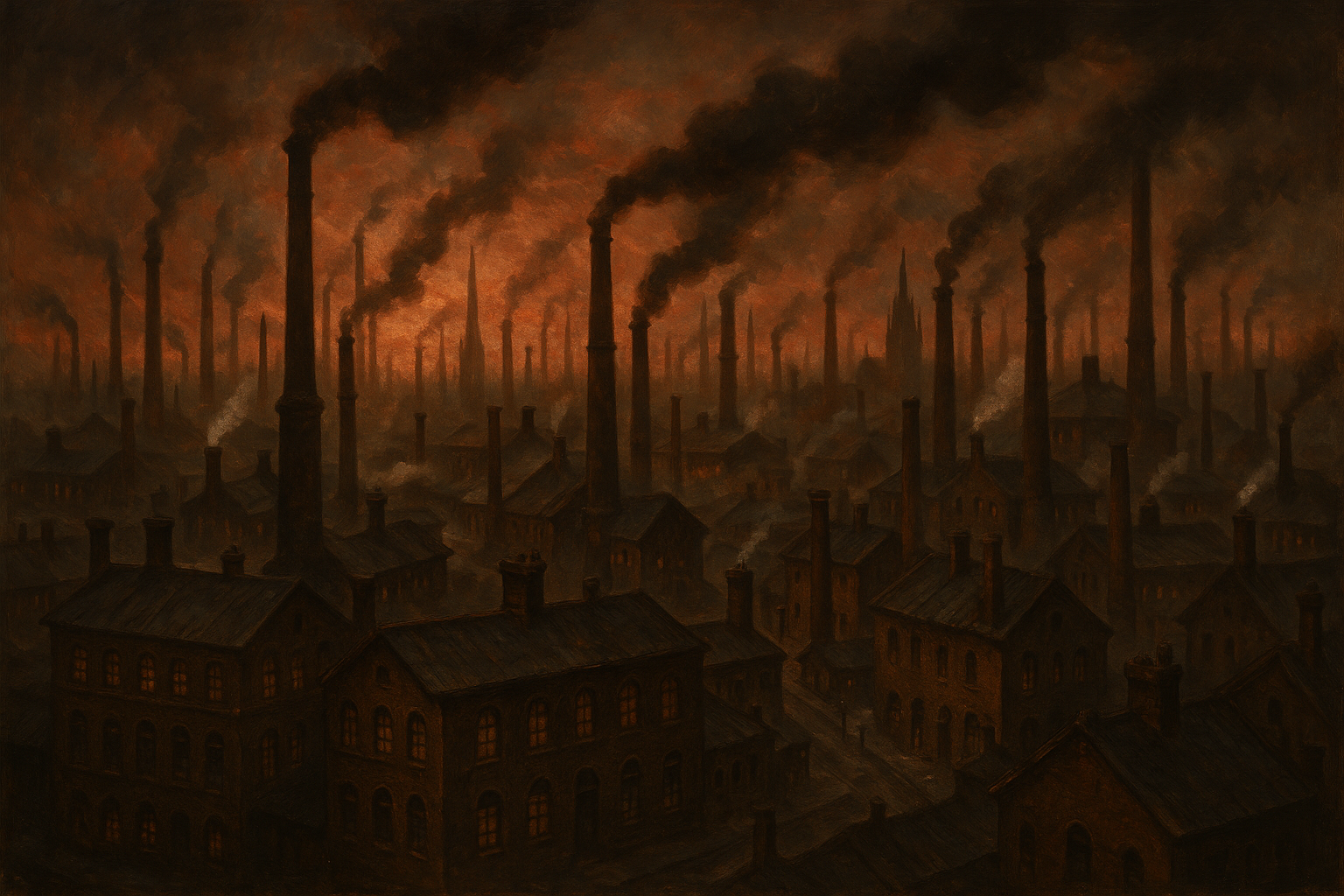
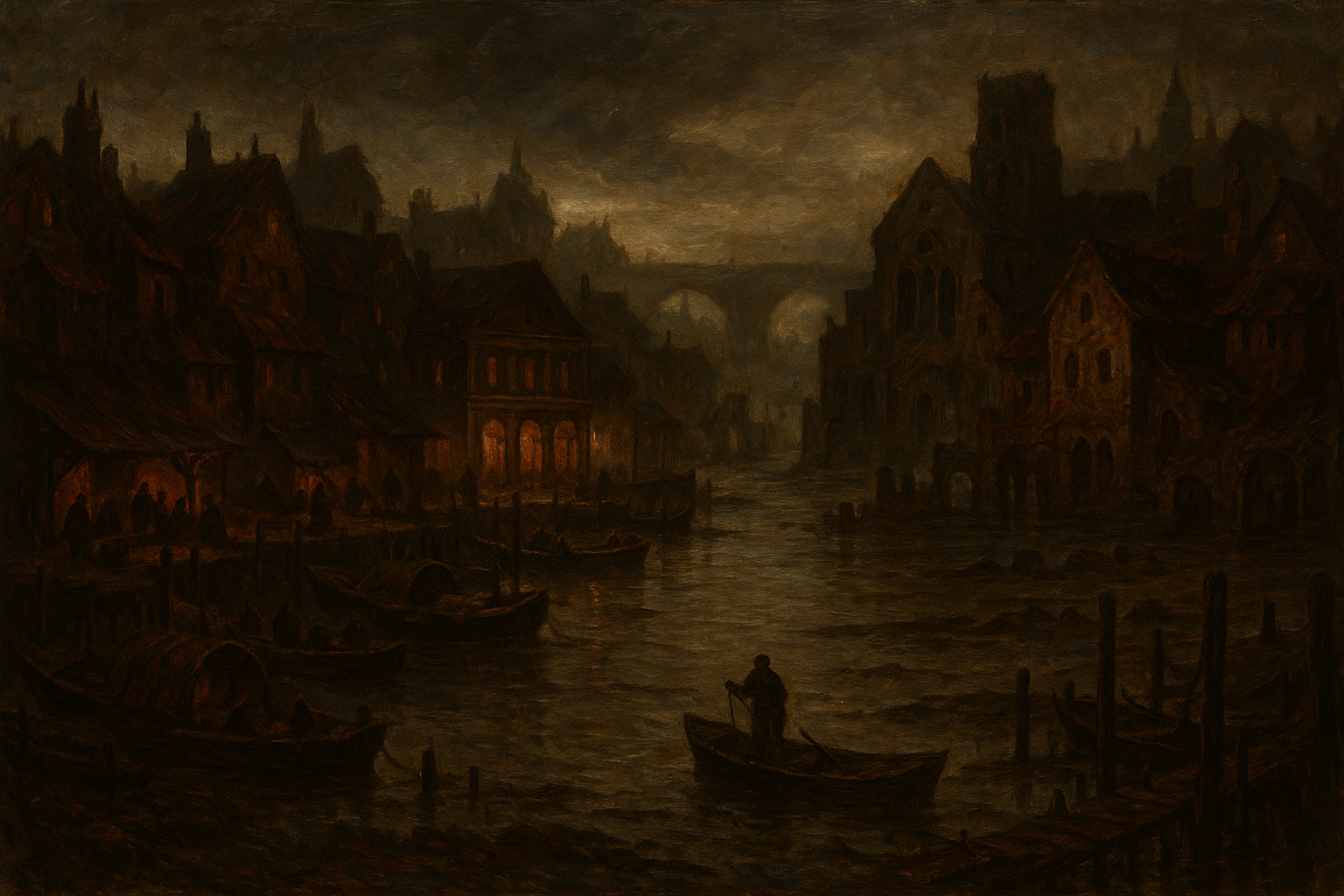
At the kingdom's heart, straddling the slow brown coils of the river Merrow, stands the Royal City of Bellwether — half a million souls stacked from the marble terraces of Crownhill down to the mudflats of the Shallows. Bellwether is the largest city Corvane has ever built and the largest company town the world has ever seen. Its people call it, without affection and without irony, the City of Chains.
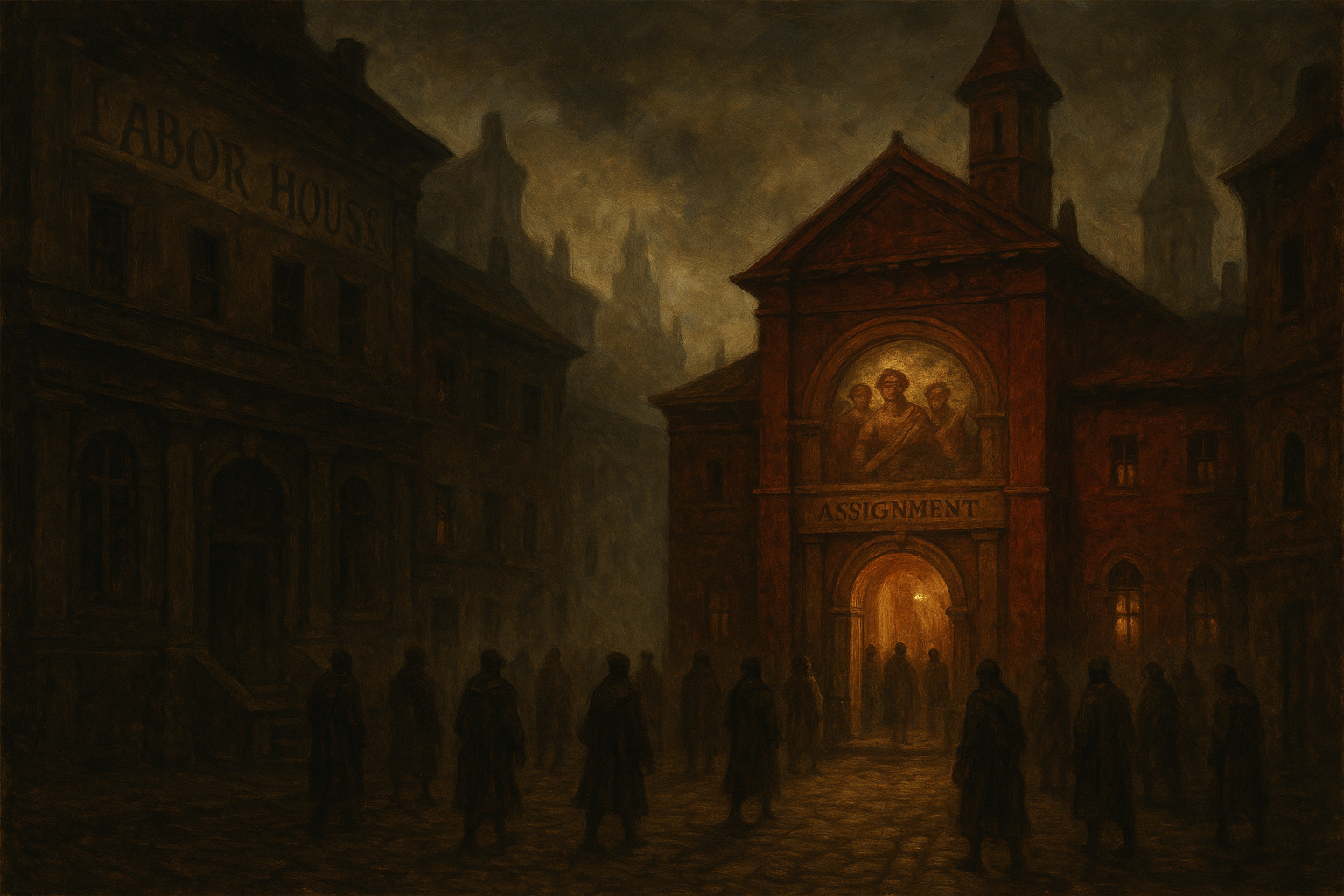
The chains are real, but most of them are made of paper. A Company contract feeds a family. A Company bed is warm. A Company scrip-token buys Company bread at a Company counter, and if the price of bread rises faster than the wage — and it always does — the Company Bank is pleased to extend credit against future labor. No one is dragged into bondage in Bellwether. They queue for it. That is the genius of the system, and the horror of it: the Five Stewards of Corvane have built a machine that people beg to be fed into, because the only thing waiting outside the machine is winter.
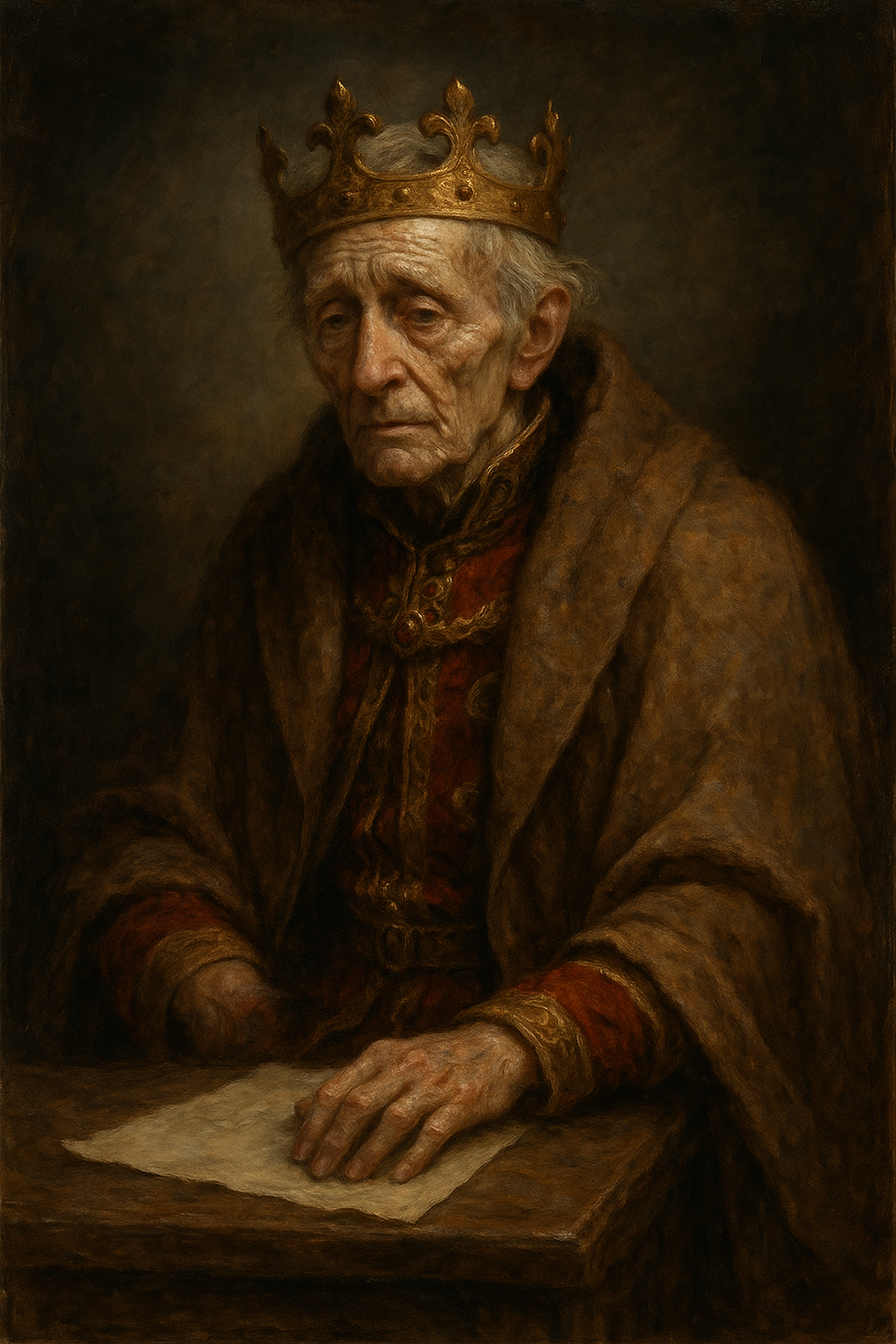
King Alaric IV, “the Gentle King”
Alaric IV has reigned for forty-one years and ruled for perhaps nineteen of them. Once he was a genuinely beloved king — the Alaric of the old songs, who walked the flood dikes in his shirtsleeves and knew his boatmen by name. Then came the Gray Winter, the debts, and the slow fog that doctors call "the king's weather." Now he is eighty-three, silver-haired and sweet-tempered, and on most days he believes his wife is still alive and the harvest is still good.
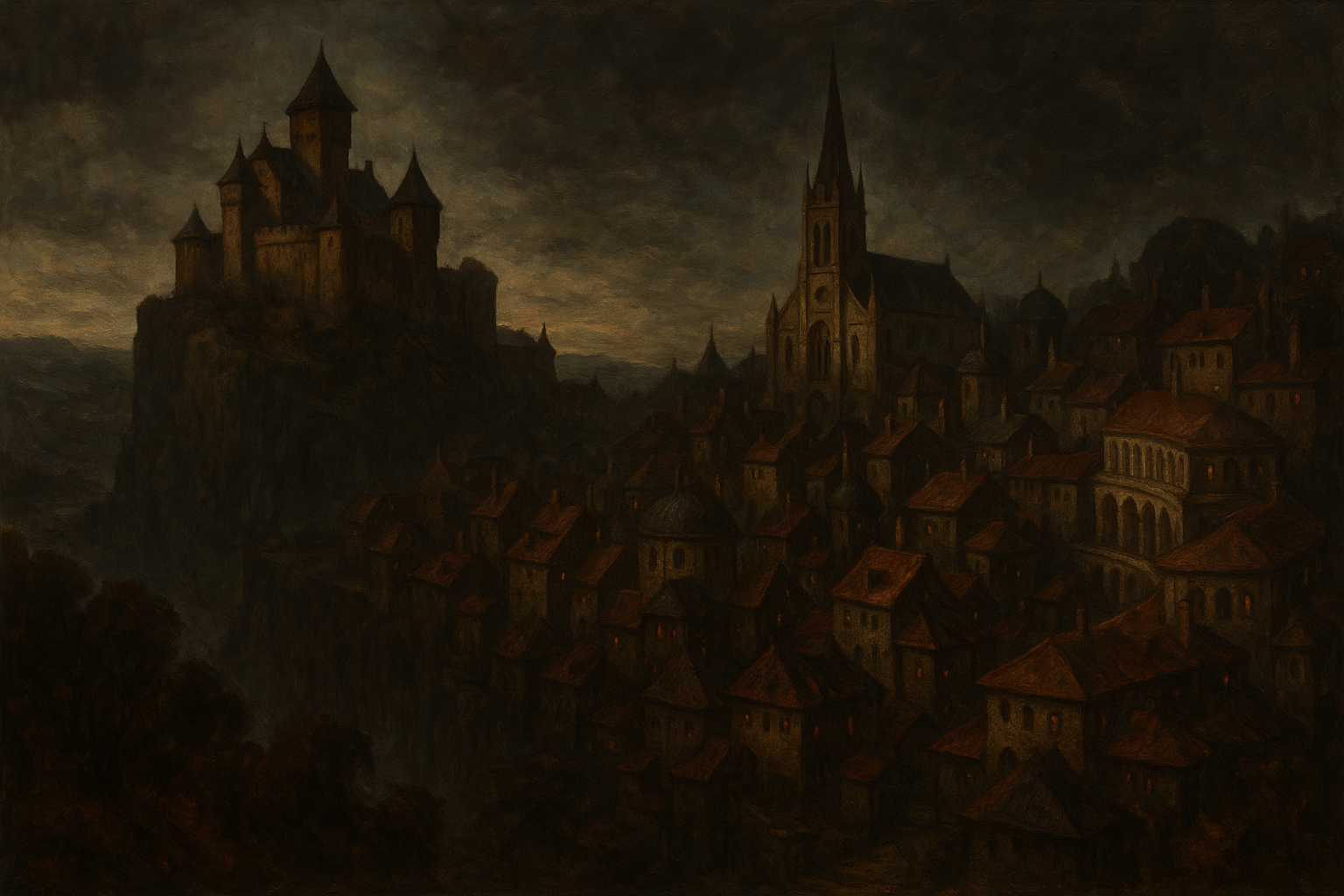
The Crown still signs every law. This is important. The Five never rule in their own names; they rule in his. Each morning a leather folder of documents travels from the Charterhouse to Castle Everwell, and each afternoon it returns signed in a wavering, gentle hand. The people are told the King is well. The bells ring. The posters say so. THE KING IS WELL has been painted on so many walls, for so many years, that it has stopped being a sentence and become a kind of weather.
The Five Stewards
Publicly, the Five Stewards. In the queues and the taverns, quieter: the Five Chains. They do not rule by the sword. They rule by being necessary.
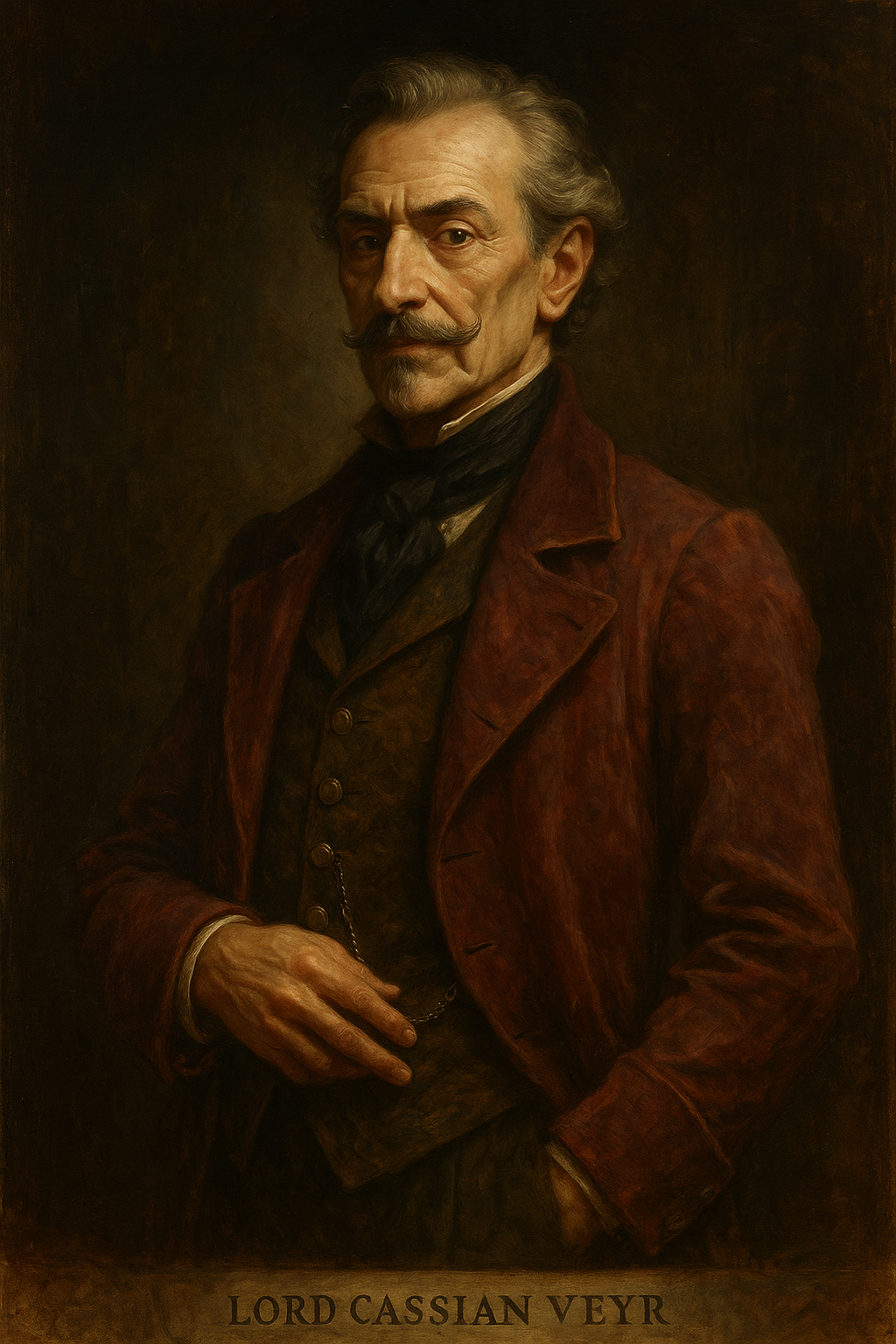
Lord Cassian Veyr
Holds: Taxation, currency, government finance, debt, and monetary policy.
The gentleman of the Five. Veyr is silver-tongued, impeccably dressed, and genuinely charming — the Steward who dines with dukes, endows orphan schools, and explains each new tax in a warm public letter that always begins "My dear Corvane." Polite society considers him the reasonable one, the proof that the Concord is stewardship rather than tyranny.
Veyr's warmth is a unit of currency, and he spends it precisely. He sets the value of the crown-mark each Tuesday, which means every wage in the kingdom is worth what Cassian Veyr decides it is worth. His orphan schools feed directly into Company apprenticeships; his charity is a hiring pipeline. He is the closest thing the Five have to a chairman, the author of their public language, and the one who long ago decided that the Crown was cheaper to rent than to fight.
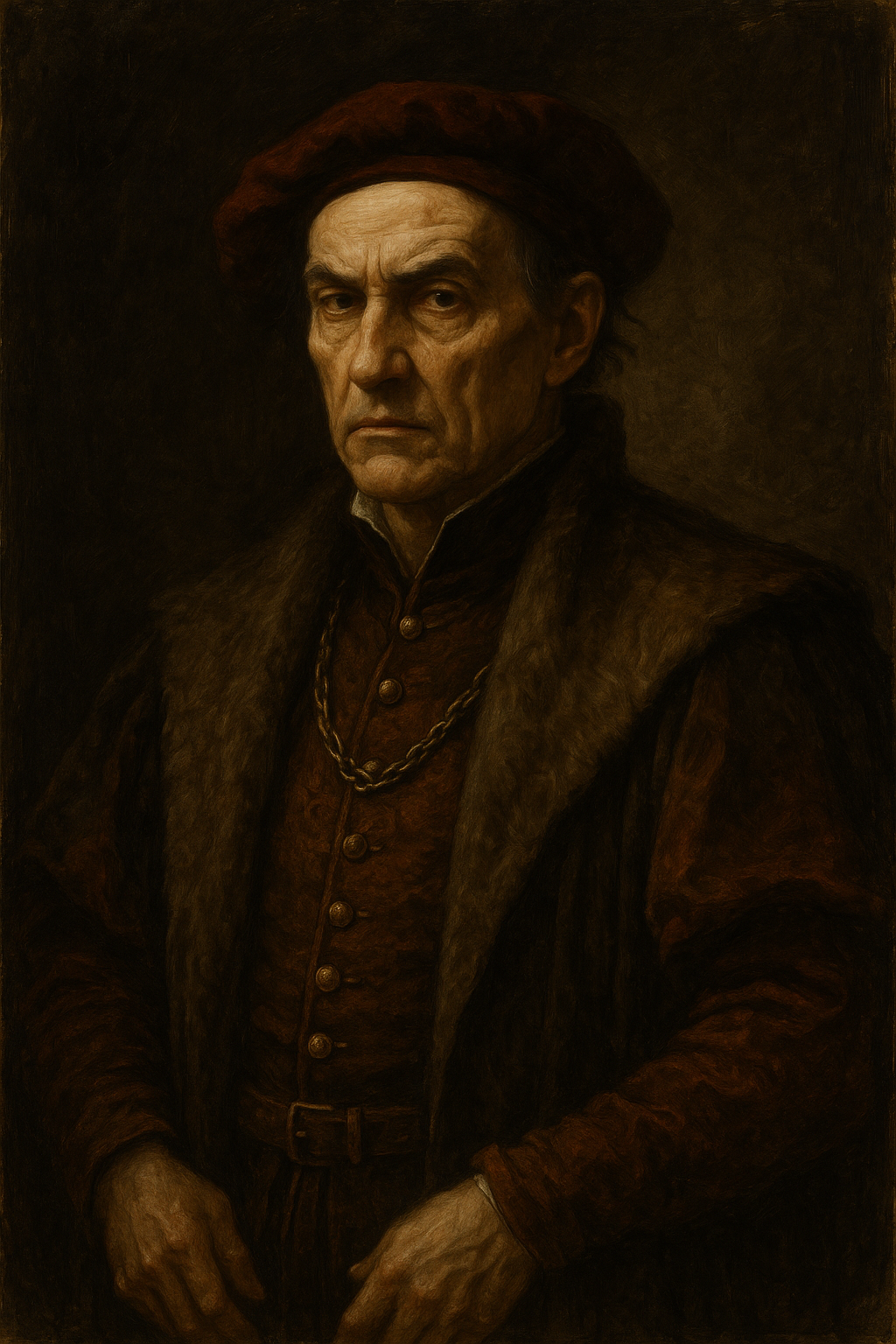
Magister Odran Bale
Holds: Banking, lending, mortgages, credit, and financial records.
The quiet one. Bale almost never appears in public and never gives speeches; his signature is a smudge, his portrait twenty years old. The city knows him as an institution rather than a man — the Vault that keeps your deed safe, your savings sound, your name recorded. Where Veyr is loved and Moldren feared, Bale is simply... assumed, like gravity.
Bale is the Five's memory, and memory is his weapon. The Vault holds every mortgage on Crownhill, every noble family's embarrassments, every judge's refinancing. He does not threaten; he reminds. A man who owes Odran Bale money has already agreed to everything Bale will ever ask — he just doesn't know it yet. He destroyed his own aide, Silas Vane, to bury a scandal, and considers the affair not a crime but a filing decision.
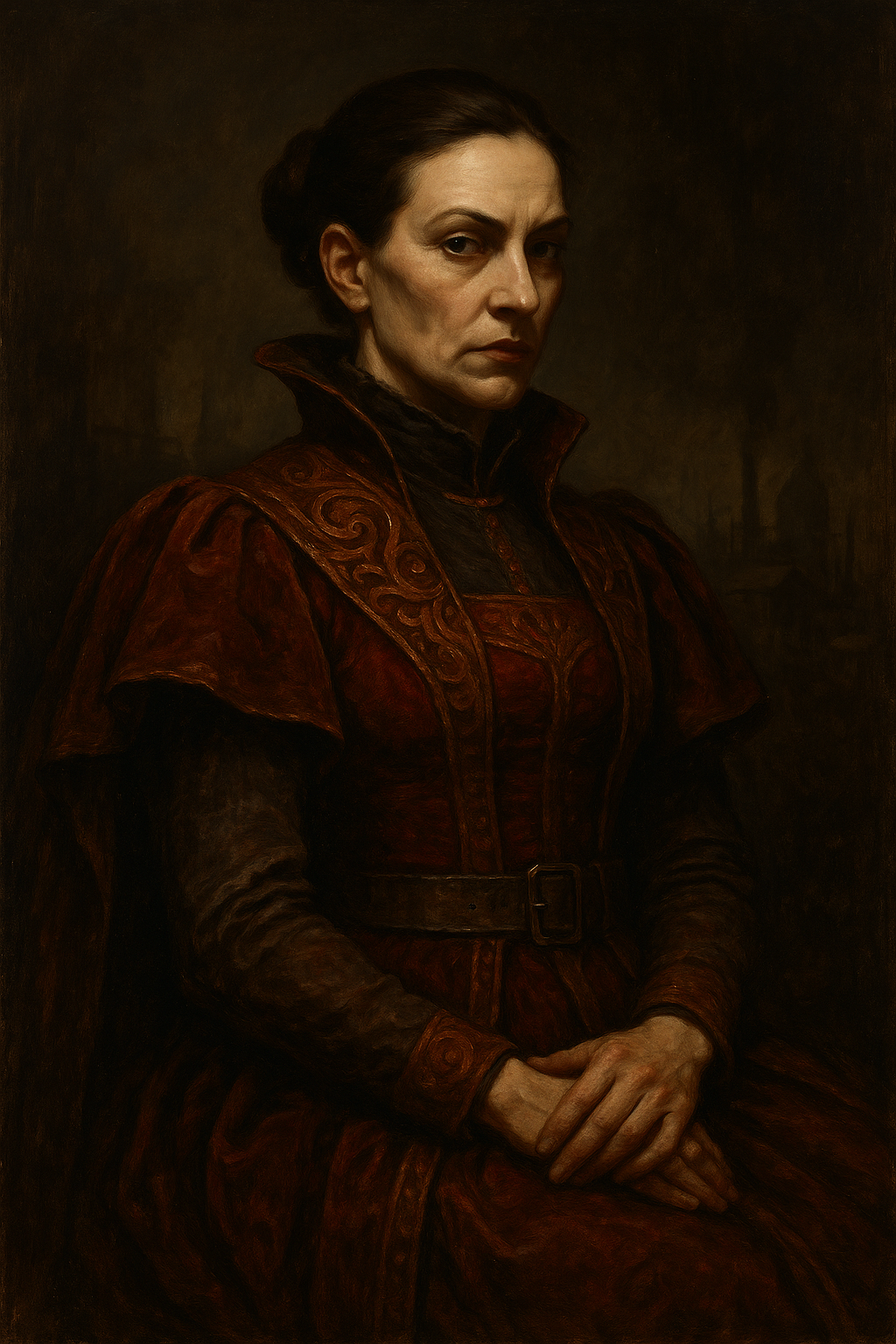
Lady Marra Voss
Holds: Indenture, "sponsored labor," the Labor Houses, and the placement of human beings.
The humanitarian. Voss presents the Labor Houses as the kingdom's great safety net — clean dormitories, guaranteed meals, honest work for the destitute who would otherwise starve in the Tangle. She tours the Houses monthly with sketch-artists in tow, is a patroness of foundling hospitals, and speaks, beautifully and often, about dignity.
Voss owns people. The paperwork calls it sponsorship; the arithmetic calls it slavery with extra steps, since Labor House debts are structured never to be repayable — board, uniform, and "placement fees" always grow faster than the credited wage. Families are split across placements as policy ("attachment complicates productivity"). And the safety net is also a threat: every free worker in Corvane behaves, because the Yoke is what waits one missed payment below them. Voss knows this. It is the product she actually sells the other four.
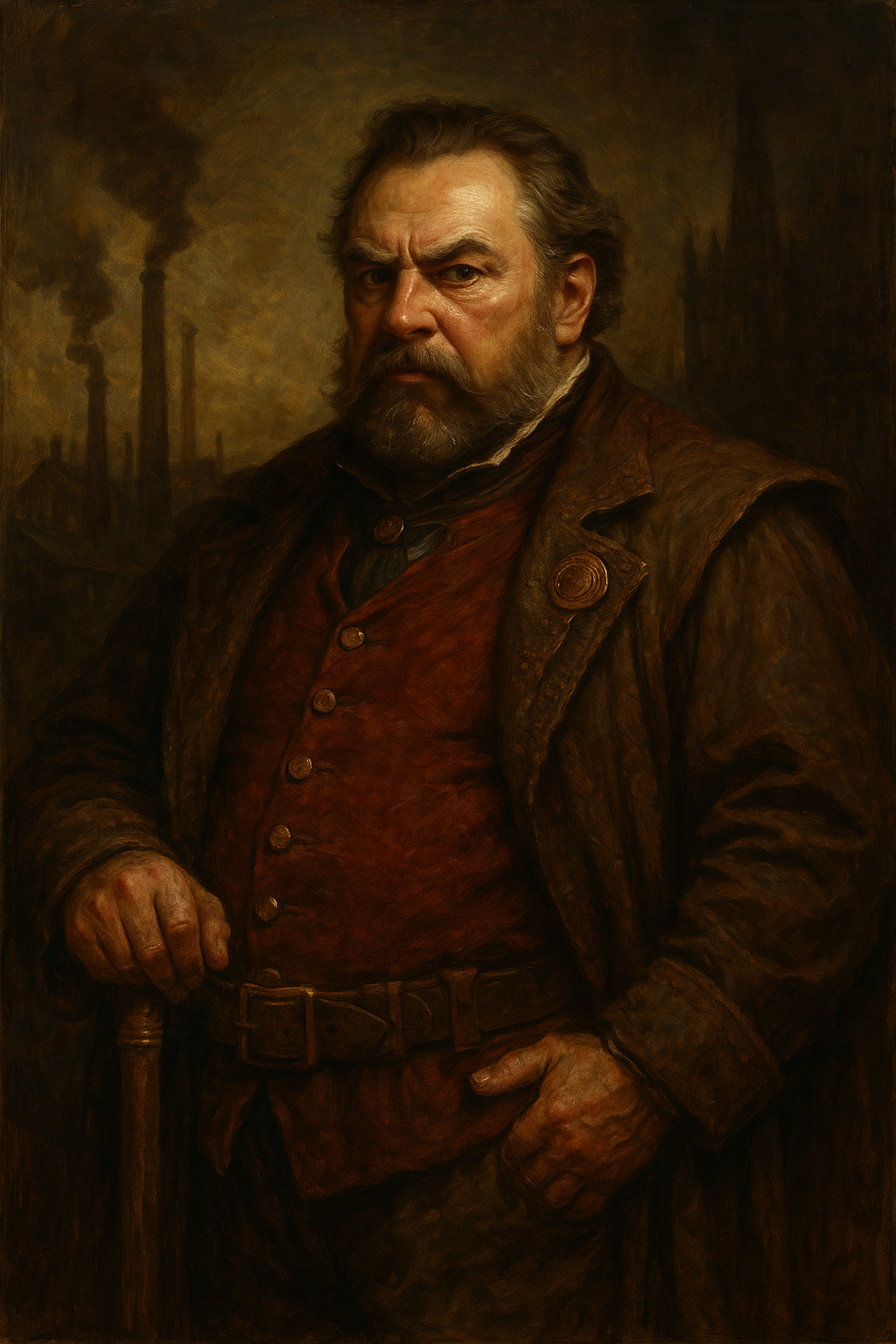
Lord Edrick Thorne
Holds: Textiles, manufacturing, the mills of the Spindle, uniforms, and mass employment.
The builder. Thorne is the Five's industrial titan — blunt, loud, self-made (he mentions it hourly), proud of his calluses and his chimneys. The posters love him: THORNE GIVES CORVANE WORK. He walks his own mill floors, remembers foremen's names, and funds the loudest festivals in the city. Half the Spindle half-likes him, which is more than any other Steward can claim.
Thorne's mills consume people the way his furnaces consume coal — the Spindle's own physicians log the lint-lung, the lost fingers, and the twelve-year-olds on night shift, and Thorne's response has been to buy the physicians. "Self-made" is also embroidery: his first three mills were bought with Vault credit extended against information he sold about his old master. He is the most violent of the Five in temper and the most dependent in fact — without Voss's labor, Bale's credit, and Moldren's bread queues driving workers to his gates, Thorne is just a man who owns sheds.
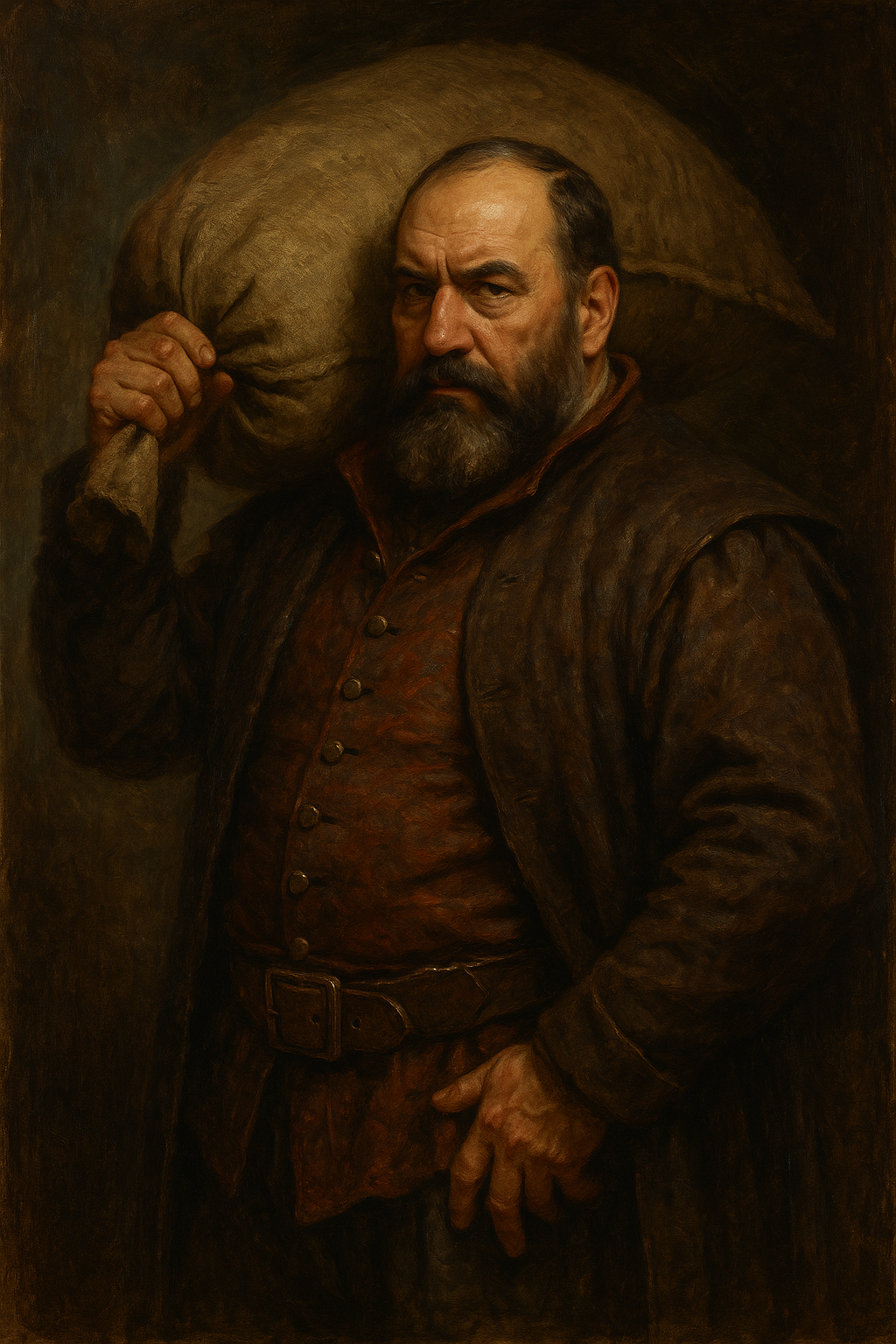
Garrick Moldren
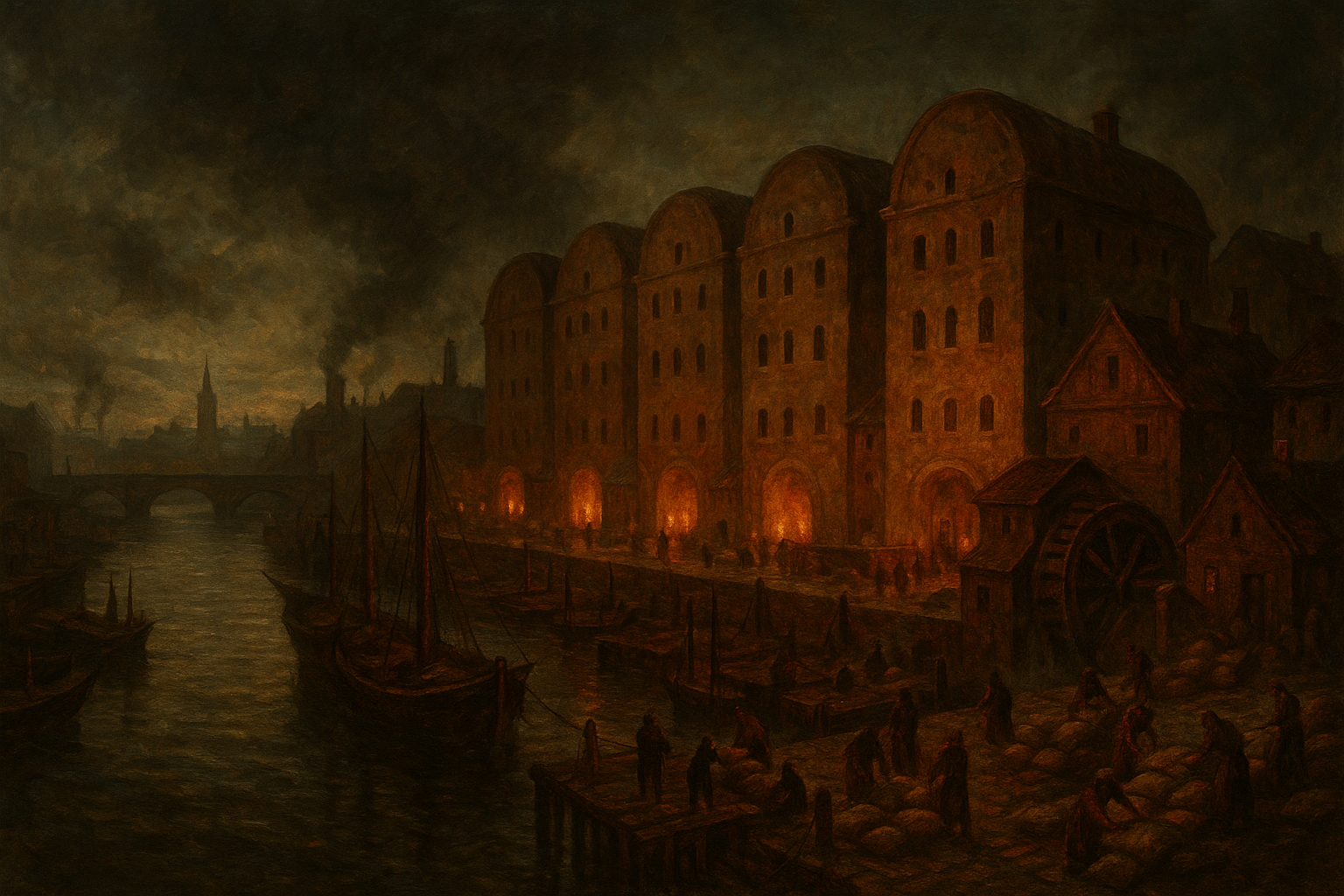
Holds: Grain, livestock, mills, warehouses, and the feeding — or not — of Corvane.
The provider. No title, no "Lord" — Moldren styles himself a plain man of grain, and his public image is the harvest itself: broad, bearded, photographed (sketched) hefting sacks he has not personally lifted in thirty years. THE FIVE PROVIDE is his slogan; the Loaves — his eleven great warehouses — are on the city's postcards. Children are taught his name with their table-grace.
Moldren is the cruelest of the Five because his cruelty is arithmetic. The Table maintains what his clerks call "price integrity": grain is warehoused, exported, or quietly spoiled rather than sold cheap, and every shortage in living memory has been a decision. He holds the kingdom's stomach in his fist, and he is the Steward the other four ultimately defer to, because bread is the one lever that never stops working. He does not hate the poor. He has simply never once thought of them as the point.
HOW THE MACHINE WORKS — the short version players will piece together in Act I. The Table controls food and manufactures scarcity to keep prices high. High prices push families to the Vault for credit. Vault debt is collateralized in labor, and defaulted labor is transferred to the Labor Houses. The Labor Houses supply the Spindle with workers who are paid in scrip. Scrip only spends at Company counters, at Company prices, set by the Coin. And the Coin taxes every step, splits the take five ways, and pays the Crown's household bills so that the King — gentle, foggy, well — keeps signing. Round and round. Each Steward holds one link. None of them can be removed without the others closing the gap. That is why they are called the Five Chains.
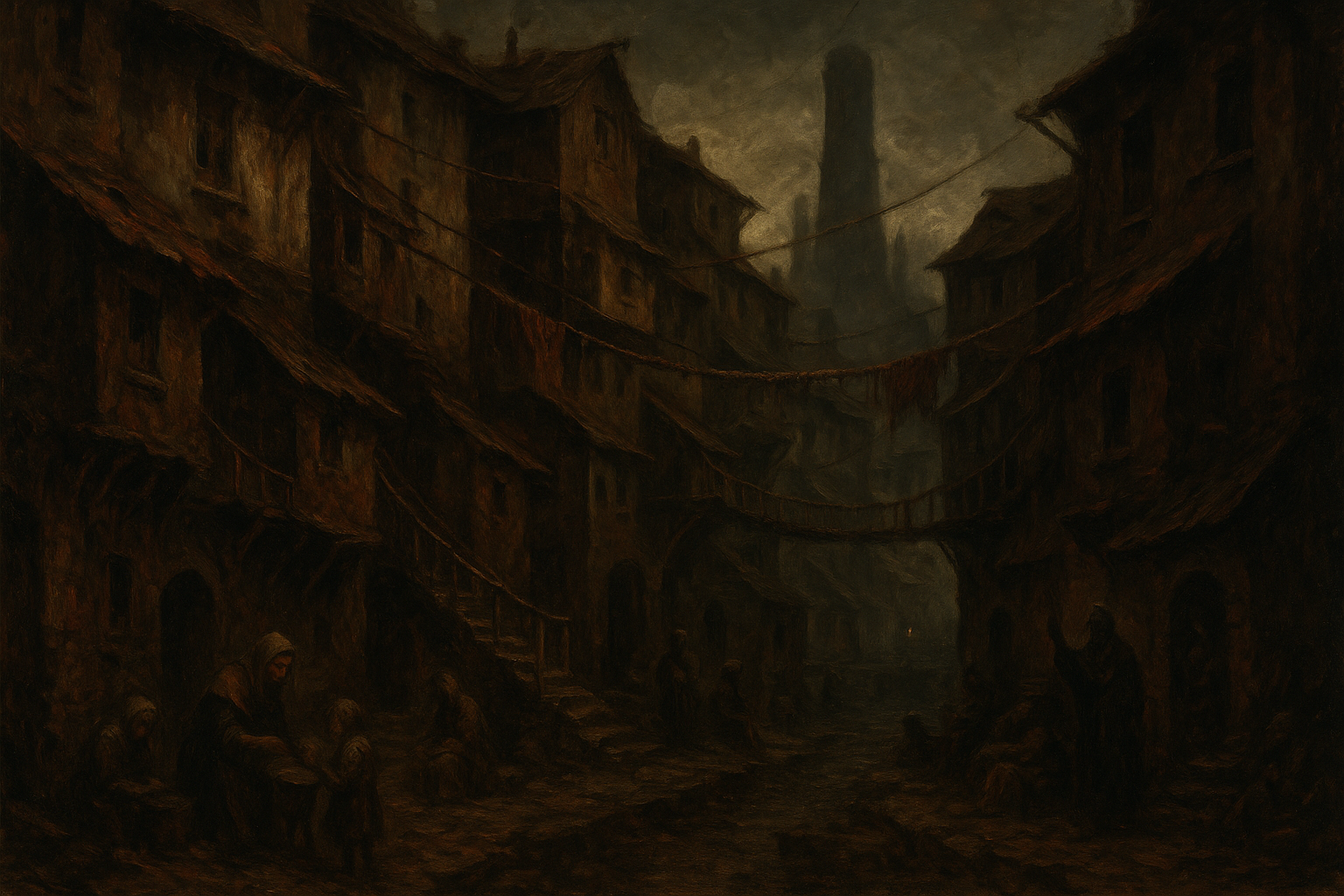
Nine Districts, Five Avenues, One Charterhouse


Freedom versus Security
The central conflict of this campaign is not a war and cannot be won with a sword — though swords will absolutely be involved. Corvane is ruled by five executives who have made themselves necessary. They control the coin, the credit, the labor, the cloth, and the bread. They are ruthless, corrupt, and — this is the uncomfortable part — they are not lying when they say the machine feeds people. It does. It feeds people the way a trap feeds a fox.
The Five's argument is security: without the Companies, the granaries empty, the mills stop, and the winter wins. Silas Vane's answer is freedom — but not the torch-and-barricade kind. He believes revolutions fail when they merely replace rulers, so he is building something slower and stranger: a second civilization growing in the walls of the first. Free kitchens. Free banks. Free presses. Songs. His revolution succeeds not when the Five are dead but when an ordinary person in the bread line realizes they no longer need permission to live.
The Five can hang a revolutionary. They have no idea what to do about a city that has started laughing at them.
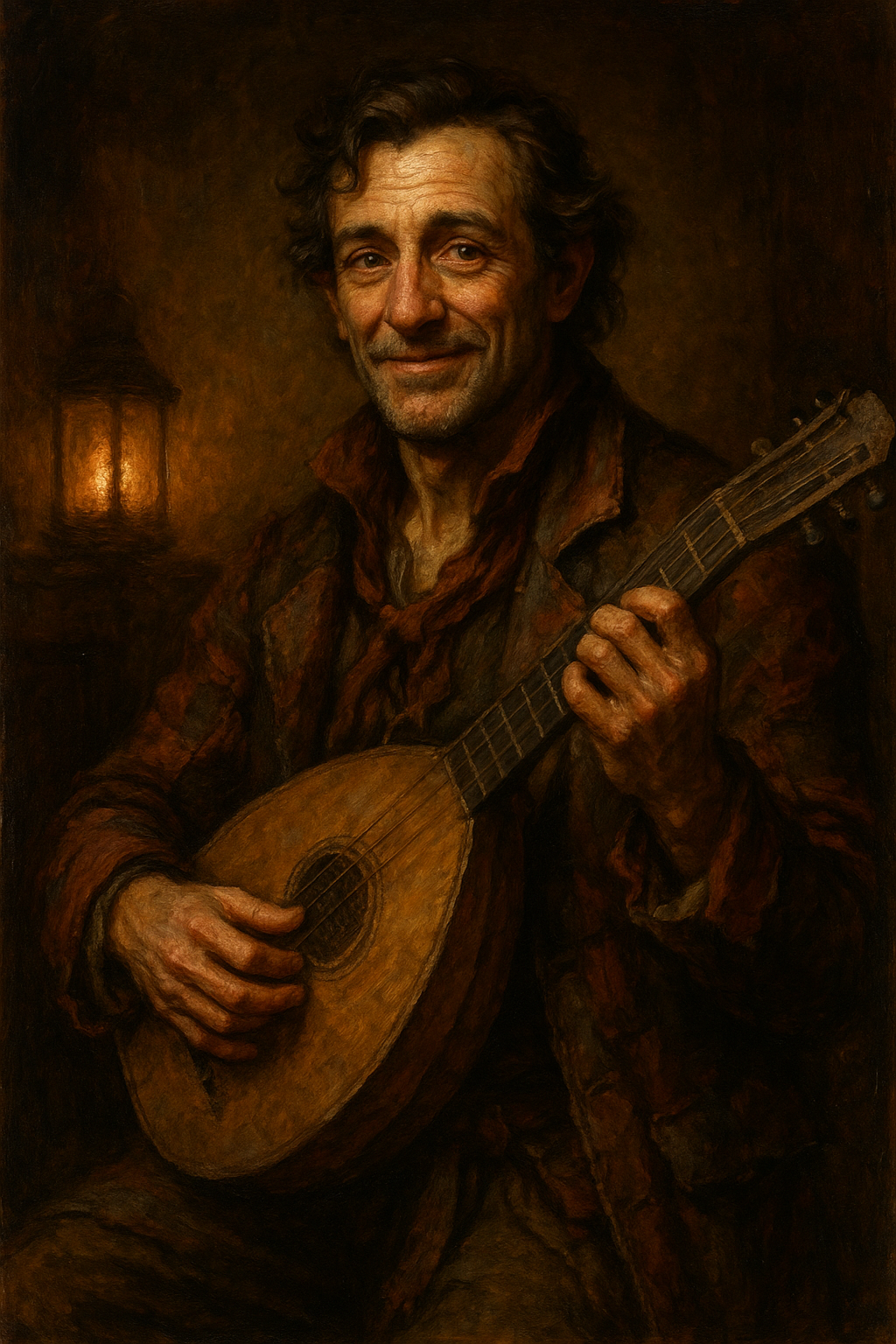
Silas Vane, The Bard of the Bread Line
Ask the Watch and Silas Vane is a disgraced clerk turned seditious entertainer — the confessed author of the Vault Scandal, stripped of position in Year 407, last officially employed as a tavern musician of no fixed address. Ask the Tangle and you get a different man: the bard who plays for bread lines, who knows everyone's name, whose songs you somehow already know the words to.
Silas was born in the Spindle to a seamstress and a mill-hand — ordinary people who took Company work because it kept them fed, and never once complained where the children could hear. He rose farther than anyone from the mill district was supposed to rise: eleven years as executive assistant to Magister Odran Bale, the Steward of the Vault himself. He was brilliant, charming, and trusted — and from that desk, he saw everything the Five would prefer unseen.
Then came the scandal. When a fortune went missing from the Vault's accounts, Bale needed someone to blame — and Silas signed the confession that was put in front of him. The price of his signature was a promise: a generous severance, and a lifetime of provisions for his family. He took the fall. He was publicly ruined. And then the payments simply stopped — "there appears to be no record of such an agreement." While grain sat locked in Company warehouses, Silas's wife, Elena, sickened and starved. She did not survive the winter. Every free kitchen in the Tangle, every soup line, every verse of every song he has written since — all of it starts at her grave.
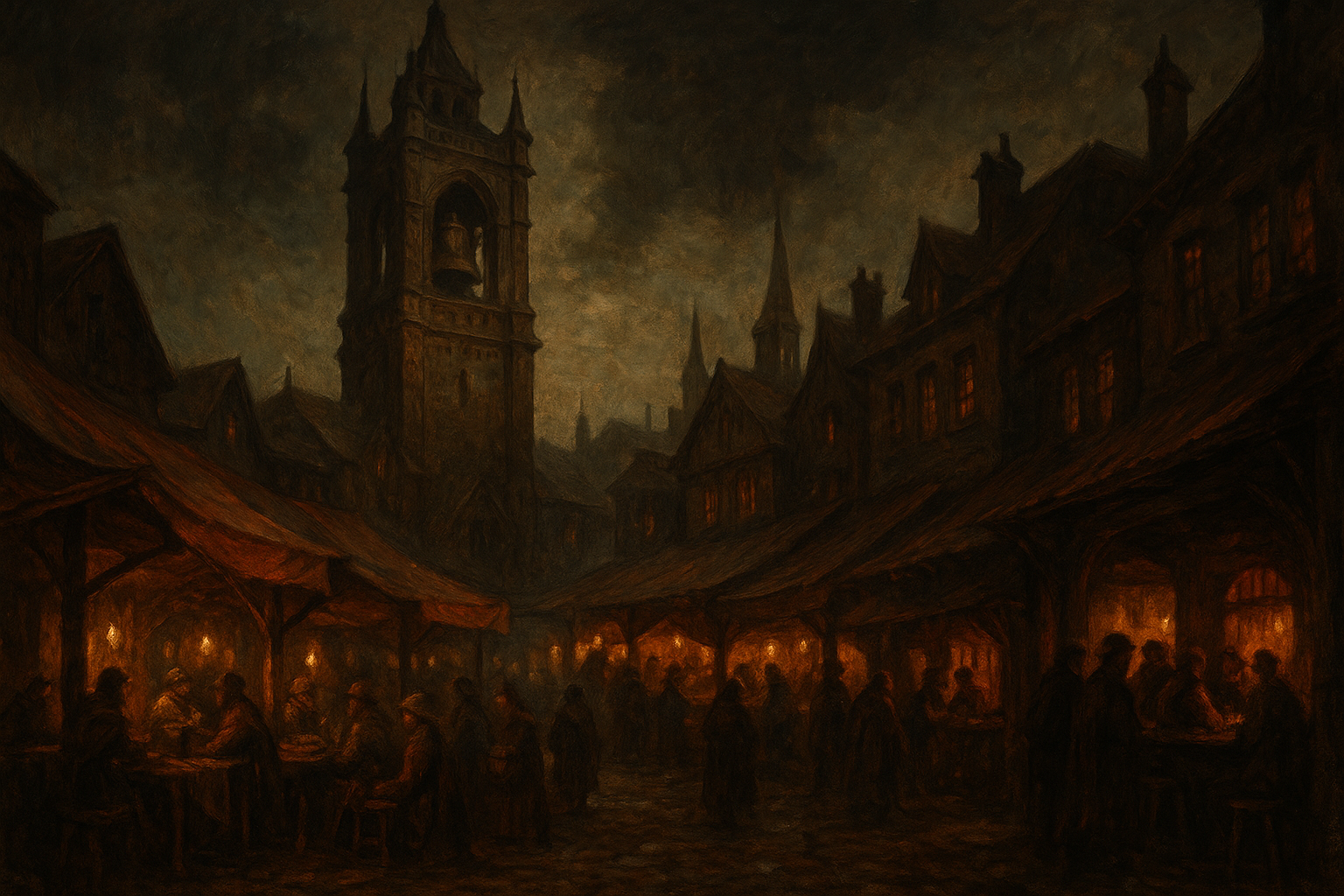
He could have picked up a knife. Instead he picked up the lute, and a harder question: why does everyone ACCEPT this? His answer is being built in cellars and kitchens all over the city. He discovered early the only magic that has ever really worked on Corvane: people will listen to a story when they will not listen to a speech. The story he is telling now, one verse at a time, in every tavern in Bellwether, is that the Five are not necessary. He does not say it. He never says it. He just keeps asking the city, in tune: "Could they? Could they? Five men couldn't own us all."
He is charming, brilliant, generous, and very hard to refuse. He is also recruiting.
“The Five Fat Pigs”
Five fat pigs in a marble sty,
Eating all the apples as the little folk die.
One counts the apples, one guards the gate,
One sells the shovel, one sets the rate,
And the fifth says, "Friends, what a wonderful feast!"
So we thank our dear pigs, from the greatest to least!
“The King Is Well”
The King is well! The King is well!
He signs what he's given and rings every bell!
He sleeps through the morning, he dines through the night,
And somehow our kingdom is doing just right!
The Bureau of Acoustic Order reminds the public that a licensed song is a lovely song.
The Five Care About You.
A Short History of the Arrangement
Three failed harvests. The Crown, bankrupt, charters five private companies to provision the kingdom "for the duration of the emergency." The emergency has now lasted fifty-one years.
Young King Alaric IV, in exchange for the settlement of the Crown's war debts, signs the Charter Perpetual: the five companies' emergency powers are made permanent, heritable, and — a clause few noticed — self-amending.
Debt bondage is legalized under the name "sponsored labor." The word "slavery" is simultaneously made an actionable slander. The Labor Houses open within the year.
Alaric IV's fog becomes public knowledge. The Queen dies the same winter. The Concord quietly assumes "temporary administrative stewardship" of the royal signature.
A shortfall of 1.4 million crown-marks is discovered in the Vault's escrow accounts. Blame settles on a single senior aide, one Silas Vane, who confesses in writing and is publicly disgraced.
An unlicensed soup line appears in the Tangle, funded by no one, organized by no one, feeding two hundred a night. The Watch closes it four times. It reopens five.
A tune called "The Five Fat Pigs" is heard in a Belfry tavern. Within a month it is heard in a Watch barracks. The campaign begins here.
The revolution is recruiting.
Twelve souls in Bellwether have a reason to answer the song-sheet in their pocket. One of them is yours — but choose carefully: a character claimed is yours alone, and the others' secrets stay theirs until the story drags them into the light.